[0D773/UZ-K]
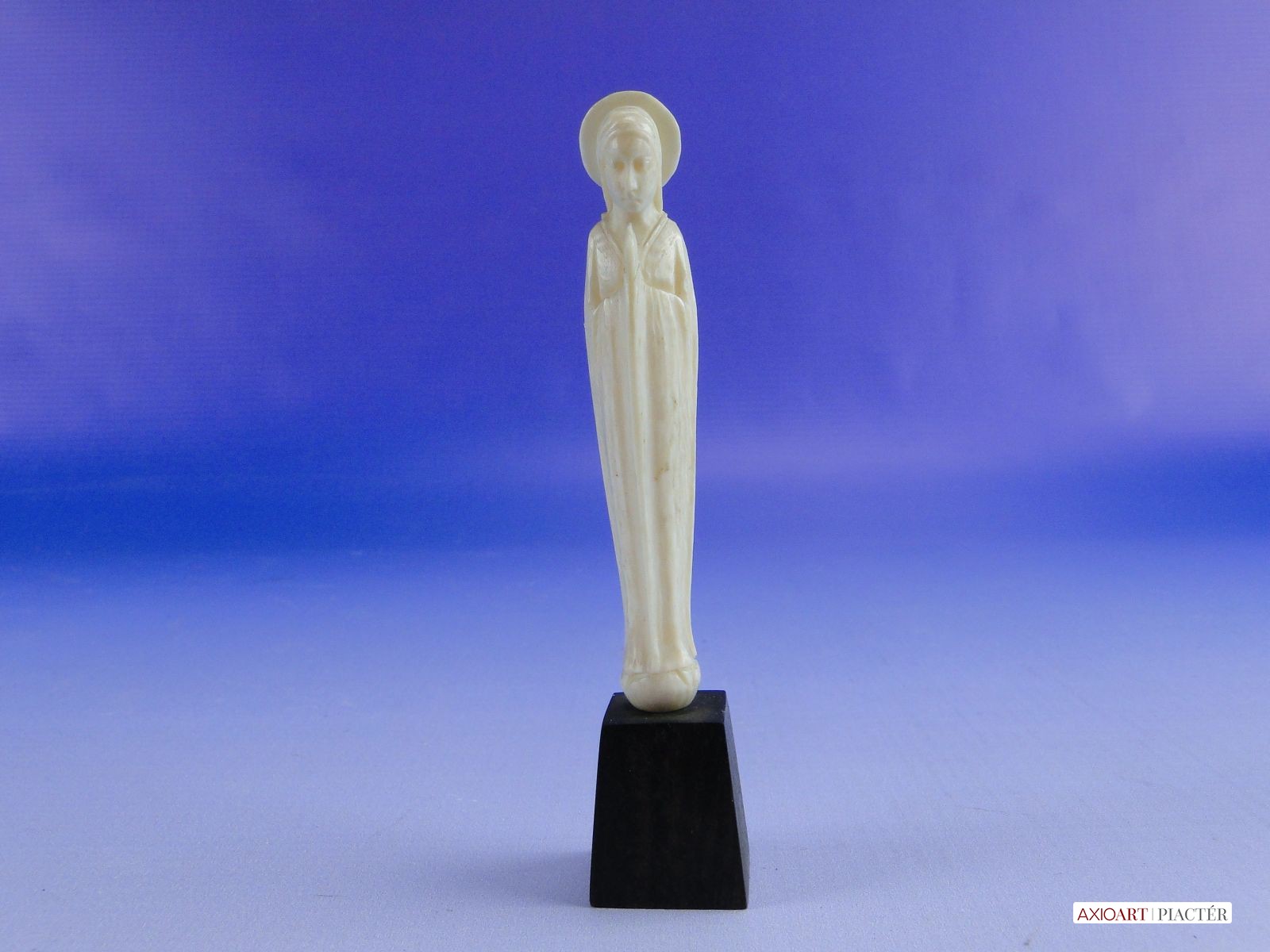
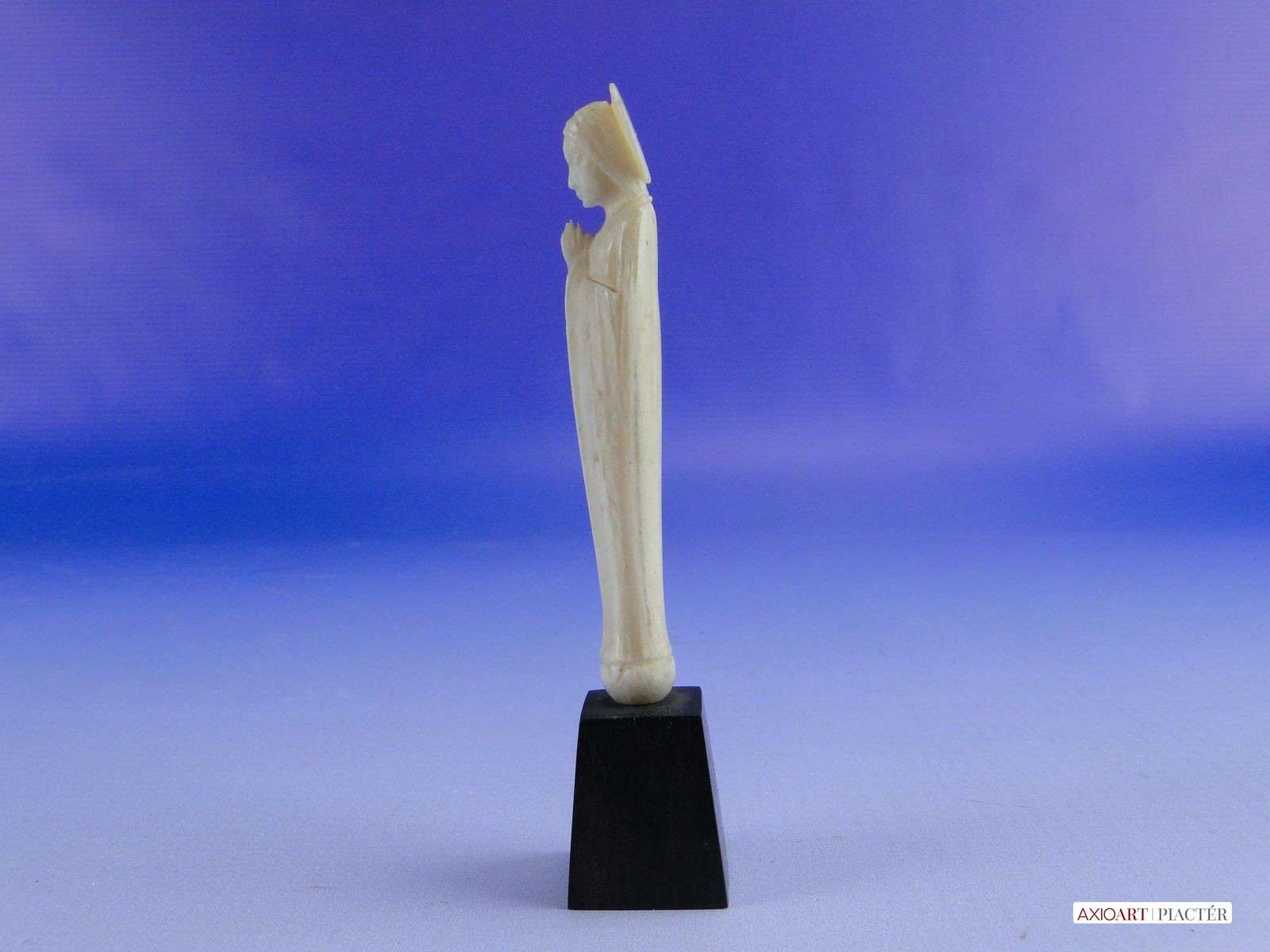
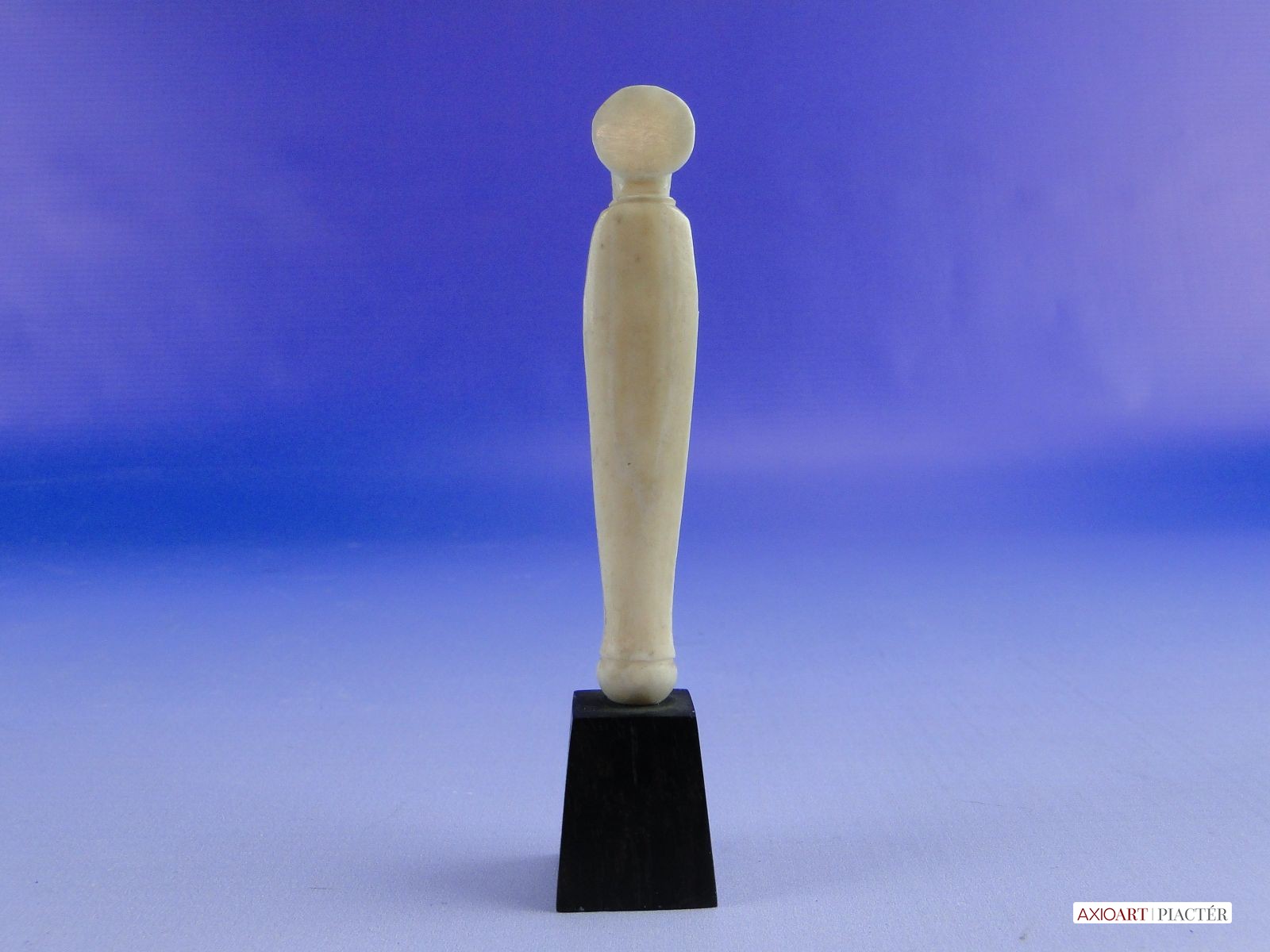
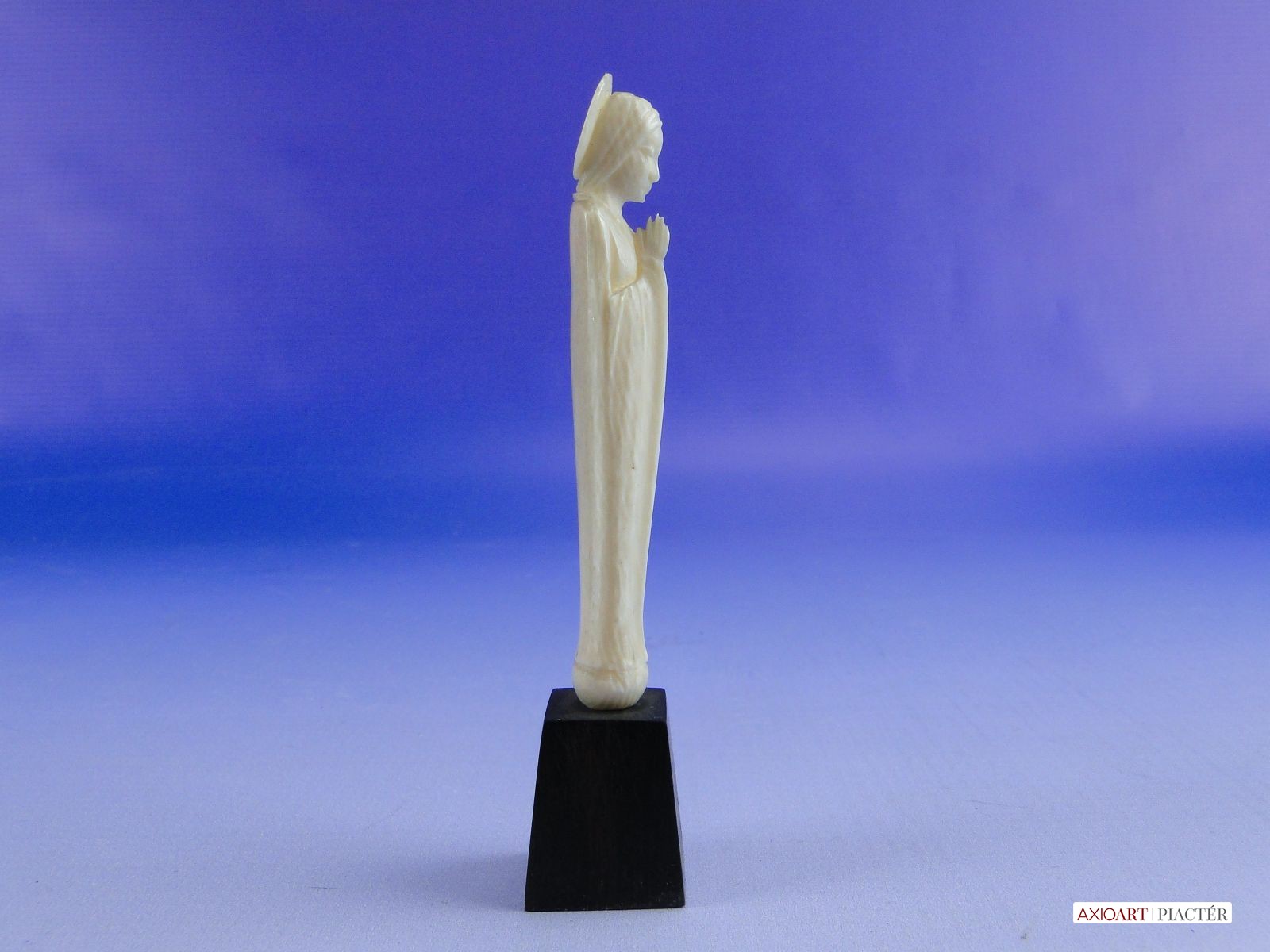
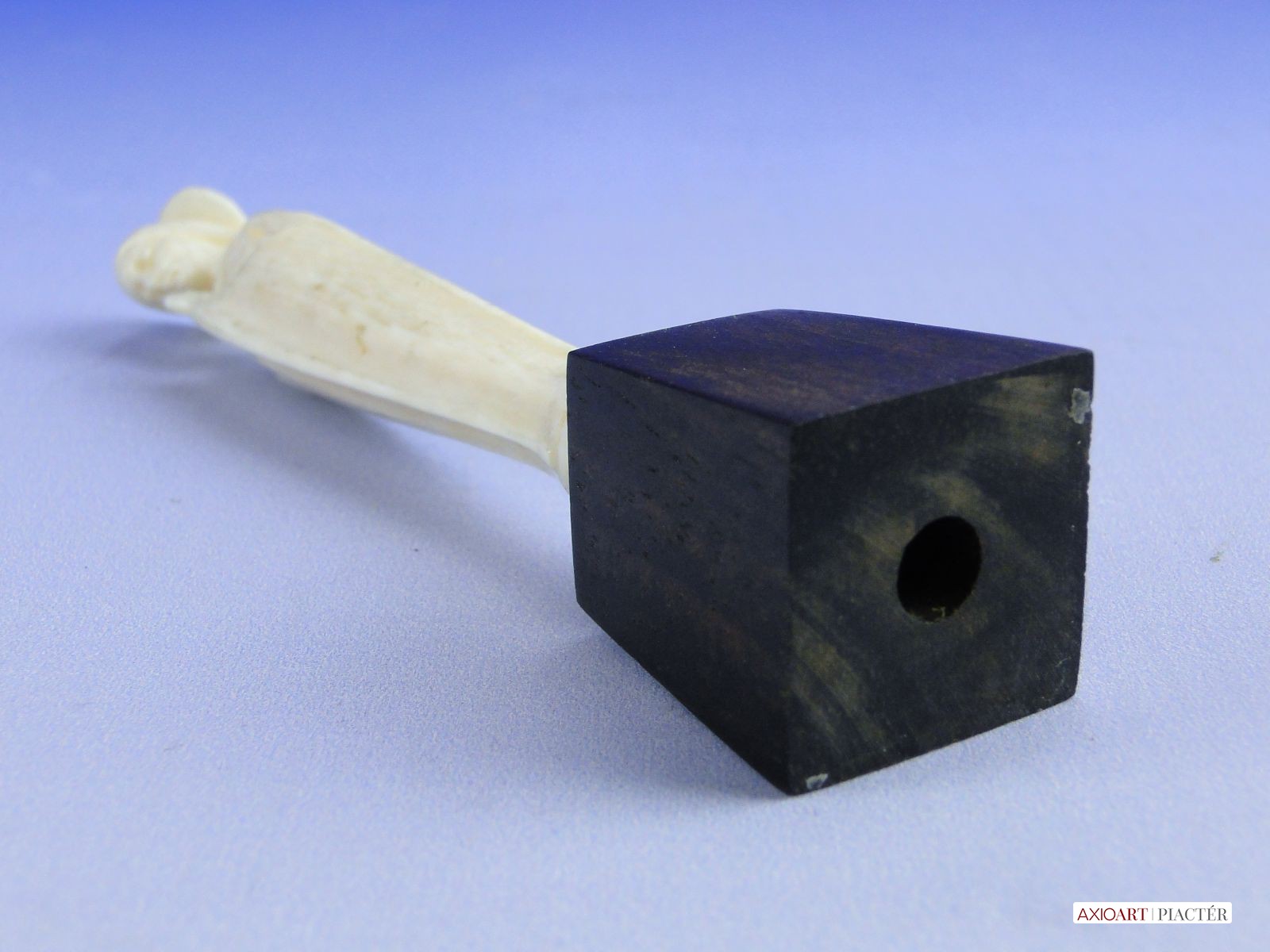
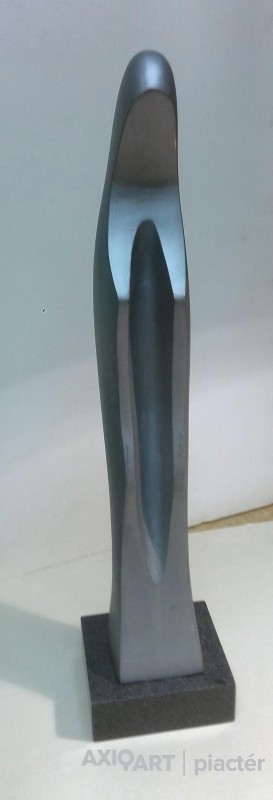
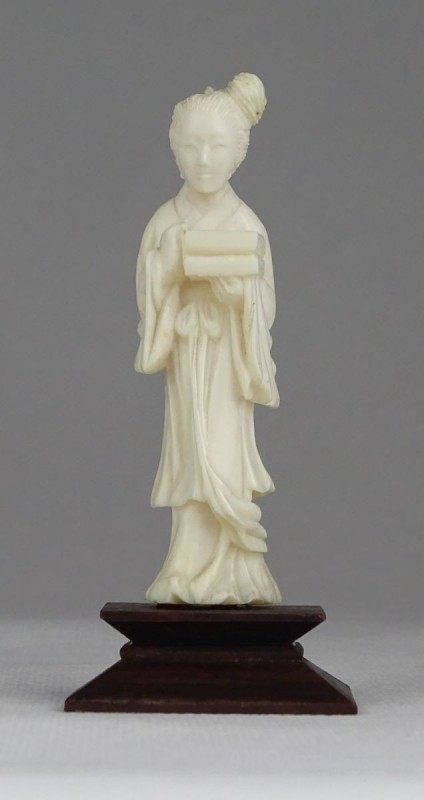
Hibátlan állapotú, keményfa talapzaton álló csontból faragott kisméretű jelzetlen Madonna szobor, csontszobor.
Amilcare Santini, Olaszországban született, Firenzében, 1910-ben.
Magasság: 9.2 cm
Súly: 0.013 kg
Amilcare Santini - The Sculptor's Life
Amilcare Santini was born in 18th April 1910 in Cecina (Leghorn), not far away from the art cities of Florence, Siena, Pisa and Volterra. Until from the most tender age he showed obvious signs of predisposition to the modelling of clay.
When he finished the elementary school, without any guide and without to attend art school, he began to create his first models of animals in clay and alabaster inspiring himself to the nature of Tuscany’s land.
The parents had the certainty that the life of this son would have been dedicated entirely to the art when at the age of 11 years, he modelled a copy in clay (little dimension) of the “Monument to the fallen of Cecina”. He followed a period of apprenticeship of two years near one of the famous workshop of the Florentine sculptures masters to the term of which, in 1924, Tito Bianchi, owner of the most important factory of statues of the age in Cecina, impressed with his skill, decided to assume him as official sculptor of the society. In that period he had a remarkable experience in the execution of models of classic statues, greek and roman and in particular way in creation of little figures of children, angels and little ladies destined to the production of the alabaster and the painted chalk by hand.
His collaboration with Tito Bianchi finished in 1939 and Amilcare began to work alone. In this period he modelled little statues from crib that still today we find in the Italian houses and in all the countries of the world.
Many important Lucca’s factories (Fontanini, Marchi and Viviani) have had used of his collaboration and still today, after 50 years, they are using little figures drawn from the models of Amilcare Santini.
In the immediate post-war period, in the course of his collaboration with the manufactures of religious statues, he modelled a plaque representing the Virgin Mary of the Siracusa’s Tears that in 29th August 1953 wipped in the house of two humble workmen. In that occasion Amilcare Santini was convened to Siracusa in order to certify the truthfulness of the lachrymation and afterwards he was received in special audience from Pope Pio XII with the civil and religious authorities of Siracusa.
In the post war period he established a small laboratory for the fabrication of stamps in rubber drawn directly from his original models made in lead and assigned to the manufacturers of statues scattered all over the world.
In 1958 with his son Nedo, 23 years old, he decided to begin the production of statues in imitation alabaster and, some months later, the production of statue in alabaster powder and oxolyte under the name of ISAC DI SANTINI NEDO (INDUSTRIA STATUE ARTISTICHE CECINESI) in a small plant in Cecina, Via della Madonna n°12.
Amilcare Santini passed a great part of life in his workshop, “I like to make also the jobs, more humbles too” was usual to say “ as to prepare the clay because this is a fundamental operation to sensitize adequately my hands to the use of this matter for the work”. For the creation of his models Amilcare Santini has always used exclusively the clay; for this reason he went himself along the Cecina’s river in order to collect a muddy liquid that, put in a container of terracotta (in Tuscany called ‘coppo’) for about 4 weeks, had a slow sedimentation. Then he moulded the clay with the hands till it didn’t catch up the suitable consistency in order to proceed to the creation of the figure.
“When, on the morning, I set off on foot towards the workshop I see already to my left the support, next there is a small bench where I have put the clay and all the tools. In front of the door there is a long table where I have arranged some witness of terracotta and statues never finished; near there is a small bench where I chisel the models assigned to the production and from the other side of the room all the counter-copies in chalk and a great full bookcase of art books”.
Only a passion succeeded to distract him from the work: the hunting. During that period of the year his creativity was very reduced with remarkable disappointment of the parents.
To whom went to find him in his workshop, Amilcare Santini has always said that the 90% of his works was exclusive fruit of his creativity taking advantage himself of the aid of the hands and least wood tools. “All my tools could be in a hand; in fact I use only little wood sticks that I have constructed with my hands in order to put molding on the clay and some steel awls that I employ to chisel the production models so as to obtain the maximum perfection in the details of the eyes, hands, hats and the particular of dresses”.
Amilcare Santini never has not been a good promoter of himself or of his work; he said “I have always worked and I have always refused to participate to art-exhibition. I have never made promotion of any type”.
Amilcare Santini is dead after short disease in 15th January 1975.
[0D773/UZ-K]
Hibátlan állapotú, keményfa talapzaton álló csontból faragott kisméretű jelzetlen Madonna szobor, csontszobor.
Amilcare Santini, Olaszországban született, Firenzében, 1910-ben.
Magasság: 9.2 cm
Súly: 0.013 kg
Amilcare Santini - The Sculptor's Life
Amilcare Santini was born in 18th April 1910 in Cecina (Leghorn), not far away from the art cities of Florence, Siena, Pisa and Volterra. Until from the most tender age he showed obvious signs of predisposition to the modelling of clay.
When he finished the elementary school, without any guide and without to attend art school, he began to create his first models of animals in clay and alabaster inspiring himself to the nature of Tuscany’s land.
The parents had the certainty that the life of this son would have been dedicated entirely to the art when at the age of 11 years, he modelled a copy in clay (little dimension) of the “Monument to the fallen of Cecina”. He followed a period of apprenticeship of two years near one of the famous workshop of the Florentine sculptures masters to the term of which, in 1924, Tito Bianchi, owner of the most important factory of statues of the age in Cecina, impressed with his skill, decided to assume him as official sculptor of the society. In that period he had a remarkable experience in the execution of models of classic statues, greek and roman and in particular way in creation of little figures of children, angels and little ladies destined to the production of the alabaster and the painted chalk by hand.
His collaboration with Tito Bianchi finished in 1939 and Amilcare began to work alone. In this period he modelled little statues from crib that still today we find in the Italian houses and in all the countries of the world.
Many important Lucca’s factories (Fontanini, Marchi and Viviani) have had used of his collaboration and still today, after 50 years, they are using little figures drawn from the models of Amilcare Santini.
In the immediate post-war period, in the course of his collaboration with the manufactures of religious statues, he modelled a plaque representing the Virgin Mary of the Siracusa’s Tears that in 29th August 1953 wipped in the house of two humble workmen. In that occasion Amilcare Santini was convened to Siracusa in order to certify the truthfulness of the lachrymation and afterwards he was received in special audience from Pope Pio XII with the civil and religious authorities of Siracusa.
In the post war period he established a small laboratory for the fabrication of stamps in rubber drawn directly from his original models made in lead and assigned to the manufacturers of statues scattered all over the world.
In 1958 with his son Nedo, 23 years old, he decided to begin the production of statues in imitation alabaster and, some months later, the production of statue in alabaster powder and oxolyte under the name of ISAC DI SANTINI NEDO (INDUSTRIA STATUE ARTISTICHE CECINESI) in a small plant in Cecina, Via della Madonna n°12.
Amilcare Santini passed a great part of life in his workshop, “I like to make also the jobs, more humbles too” was usual to say “ as to prepare the clay because this is a fundamental operation to sensitize adequately my hands to the use of this matter for the work”. For the creation of his models Amilcare Santini has always used exclusively the clay; for this reason he went himself along the Cecina’s river in order to collect a muddy liquid that, put in a container of terracotta (in Tuscany called ‘coppo’) for about 4 weeks, had a slow sedimentation. Then he moulded the clay with the hands till it didn’t catch up the suitable consistency in order to proceed to the creation of the figure.
“When, on the morning, I set off on foot towards the workshop I see already to my left the support, next there is a small bench where I have put the clay and all the tools. In front of the door there is a long table where I have arranged some witness of terracotta and statues never finished; near there is a small bench where I chisel the models assigned to the production and from the other side of the room all the counter-copies in chalk and a great full bookcase of art books”.
Only a passion succeeded to distract him from the work: the hunting. During that period of the year his creativity was very reduced with remarkable disappointment of the parents.
To whom went to find him in his workshop, Amilcare Santini has always said that the 90% of his works was exclusive fruit of his creativity taking advantage himself of the aid of the hands and least wood tools. “All my tools could be in a hand; in fact I use only little wood sticks that I have constructed with my hands in order to put molding on the clay and some steel awls that I employ to chisel the production models so as to obtain the maximum perfection in the details of the eyes, hands, hats and the particular of dresses”.
Amilcare Santini never has not been a good promoter of himself or of his work; he said “I have always worked and I have always refused to participate to art-exhibition. I have never made promotion of any type”.
Amilcare Santini is dead after short disease in 15th January 1975.
FORRÁS: http://www.isac-statue.it/eng_amilcare.php